
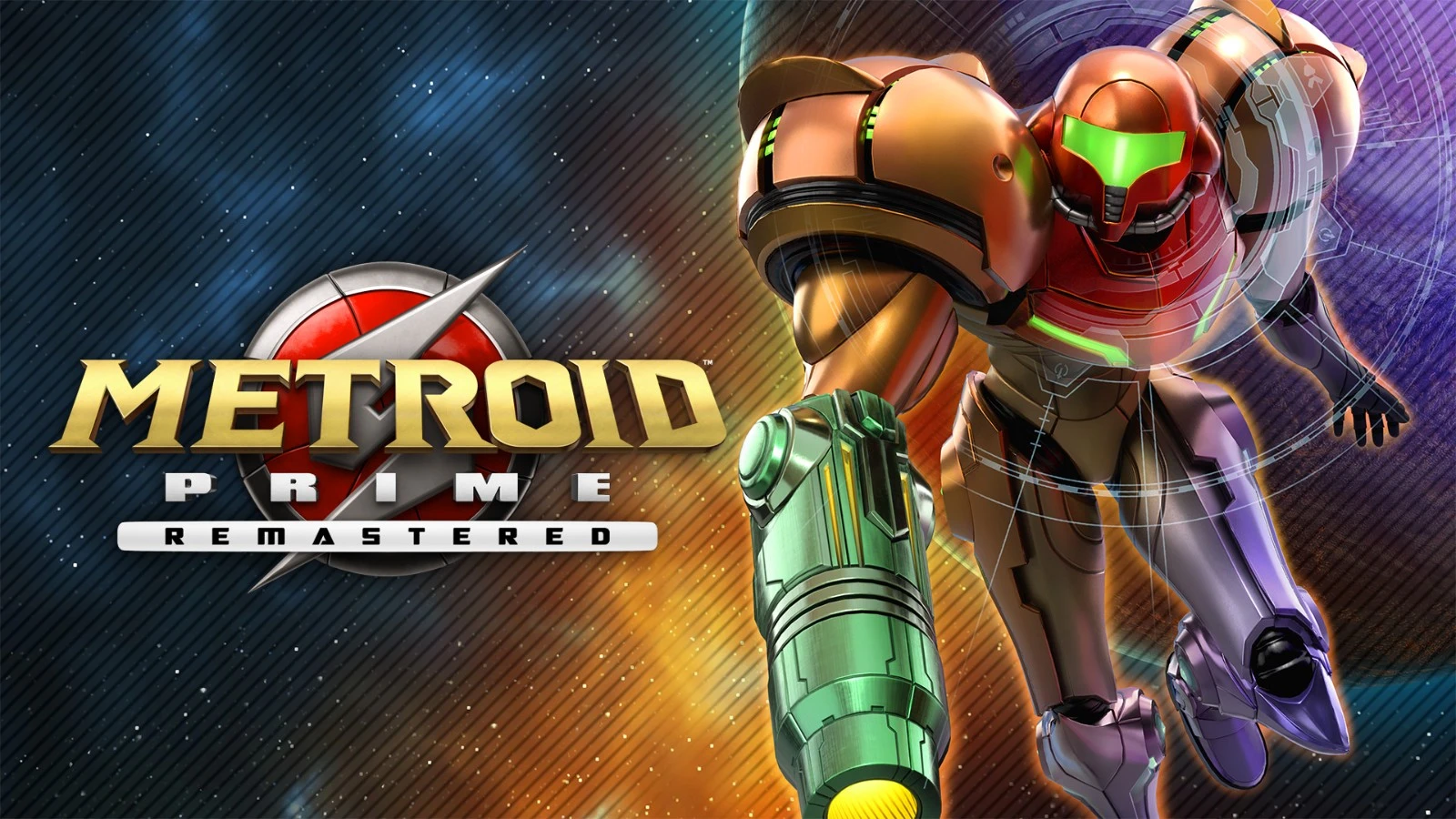
Metroid Prime Remastered
My review for one of the best remasters ever made for one of the best games ever made for one of my favourite series ever in one of my favourite videogame genres
I love Metroid.
While I was aware of emulation from a young age, thanks to Ocarina of Time and Mario Kart 64, I never quite understood that there’s more emulators out there besides the old Project 64 until an older friend showed me his computer running them.
Along Pokémon Fire Red and Final Fantasy I & II, Metroid Fusion was one of the first ever Game Boy Advance games I saw emulated. Fusion andZero Mission were some of the first games I ever completed, and Metroid Dread was the first game I ever finished with 100% items.
Back in the day, when I was less than ten years young. My mom would visit a friend of hers, and they would talk about whatever moms talk about. Mom’s friend babysit me when I was a youngling, she was older than mom and had a son who was also older than me. He had a Wii, and would let me play games like Wii Sports, and even Super Mario Galaxy.
There was one title there that I had seen, featuring that orange armored bounty hunter that I had seen in Super Smash Bros Brawl too, Samus. I remember clearly reading Metroid Prime 3: Corruption, and reading the back of the case a few times. It looked interesting for sure, but I never got around to even ask for permission to play it.
Alas, it was one of many titles back then, but as I grew familiar with the mainline 2D games, I was interested on seeing this side of Metroid too, obviously starting from the first game.
While there are many unofficial ways to play the original trilogy, I have a Nintendo Switch and knew that Metroid Prime Remastered was praised as the ultimate way to play the first entry of the trilogy. With this in the back of my mind, I visited my local physical store one day, saw it, and bought it!—then realized it was much, much cheaper to buy online, but whatever.
Years went by and my collection kept growing, I decided I would give this title a go for the Summer Game Challenge, and I’m happy to say: I have experienced a masterpiece.
Story
Metroid Prime Remastered begins with Samus investigating a Space Pirate ship orbiting the planet Tallon IV. After an encounter with some mutated life forms, Samus is forced to escape when the ship’s self-destruct sequence is triggered—something that usually happens until the end of every game—and her power suit suffers some damage, causing her to lose most of her upgrades.
As she escapes she finds a familiar foe, Ridley, flying towards the planet. As weakened as Samus is, she is still fearless, and chases after him, about to begin a new adventure.
Samus will find her way through many environments and locations, to find out what the Space Pirates are doing here. The planet once housed a settlement of the Chozo civilization, but only ruins remain. She will be able to recover her powers by overcoming every obstacle that comes her way, defeating different bosses, and getting a bit lost, from time to time.
The Chozo are an ancient species who raised Samus in her youth. they expanded all over the galaxy, but they suddenly faded away. The game will feature plenty or murals portraying information and a backstory behind everything going on. The same is true for the Space Pirates, who will have logs of their research and plans. As the story continues, there are also mentions of Samus’ arrival and the actions taken by the enemy to try and counteract her progress.
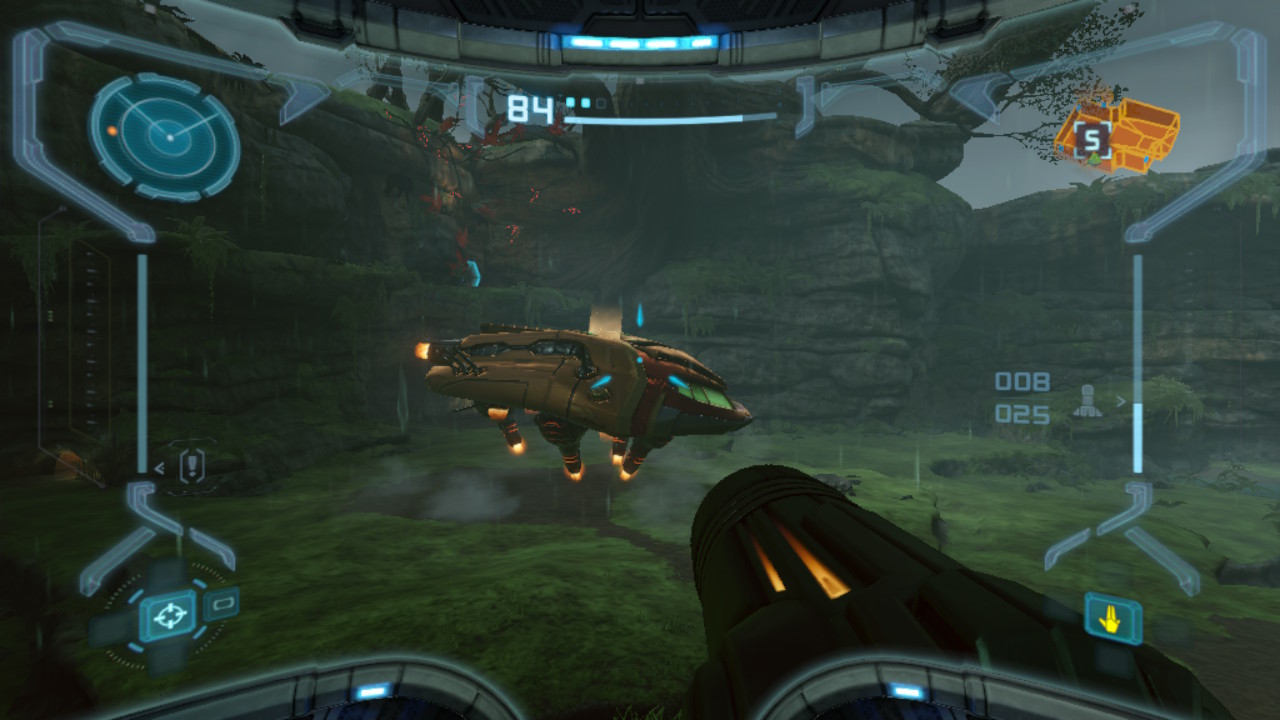
I really, really enjoyed the way this title’s backstory is exposed, it felt like what Outer Wilds—a game I’m yet to beat but played for 11 hours—does for its own exploration. Letting you catch glimpses of what happened, not always in the right order, and allowing you to piece everything togeter until you have a full narrative.
You can find and read all these during the game, but they are also easy to miss and pretty much optional. The way things develop during the game is also interesting, as you see the planet change because of what’s going on, you can tell the influence of the Space Pirates and their plans in effect.
There’s basically no dialogue throughout the whole game, Samus is isolated the whole time. The bounty hunter will face her destiny, and Samus is not here to lose.
Gameplay
Nintendo called this a “First Person Adventure”, where the focus is not on shooting, but exploring your way around the planet. There are many areas to explore, the Chozo ruins, Tallon IV’s Overworld, the Magmoor Mines, the Phendrana Drifts, and many locations within those regions. It’s just a Metroidvania in first person okay?
For exploration, Samus counts with a variety of movement options, that will let you reach different areas of the map. Upgrades like the morph ball and the grapple beam are classic at this point, smooth and satisfying to use. There are many more upgrades and some movement options. I would rather not spoil them as some of them are unique to Metroid Prime. There was a lot of thought put into how these powers would be brought to the third dimension. I’d say all of them were adapted perfectly.
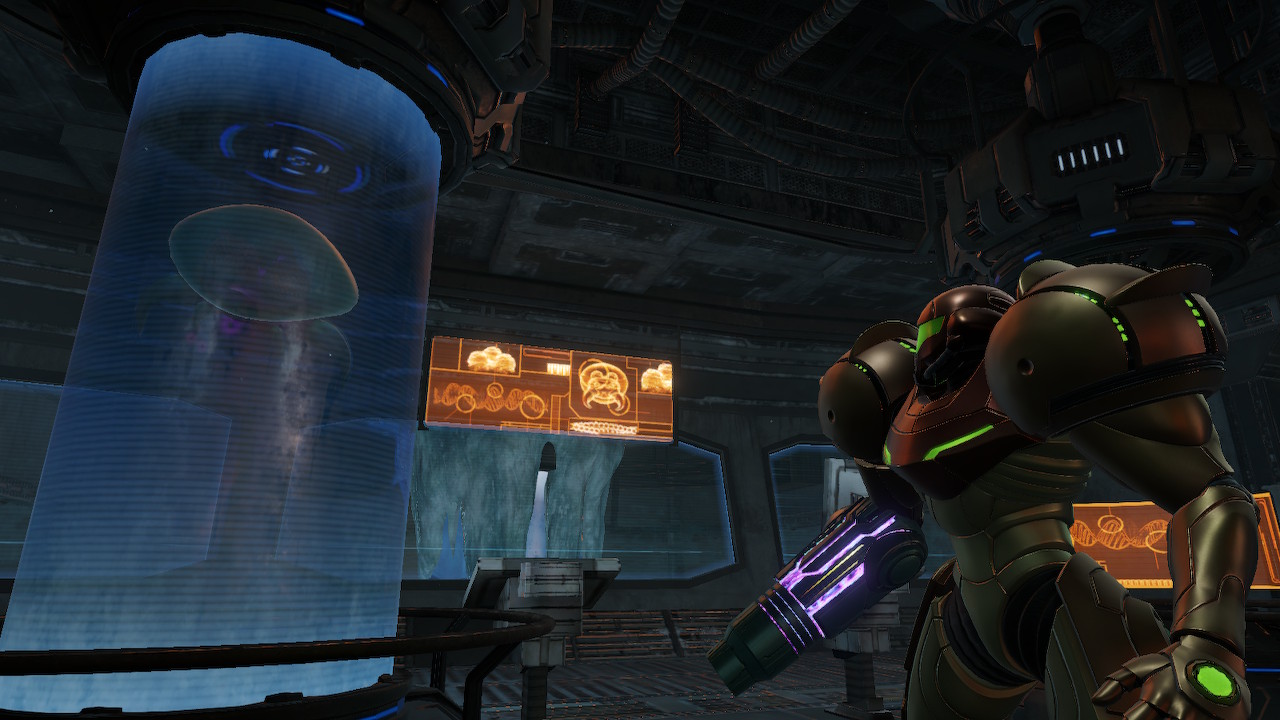
Another unique feature of Prime is the visor. The developers put a lot of care making sure the player is inmersed into their role as Samus. When something explodes, for example, the light will reflect and you’ll see a glimpse of your own face. When there is sand, or smoke, the visor will be obstructed or foggy. There are other conditions which affect your vision, and these are a highlight of the game worth experiencing.
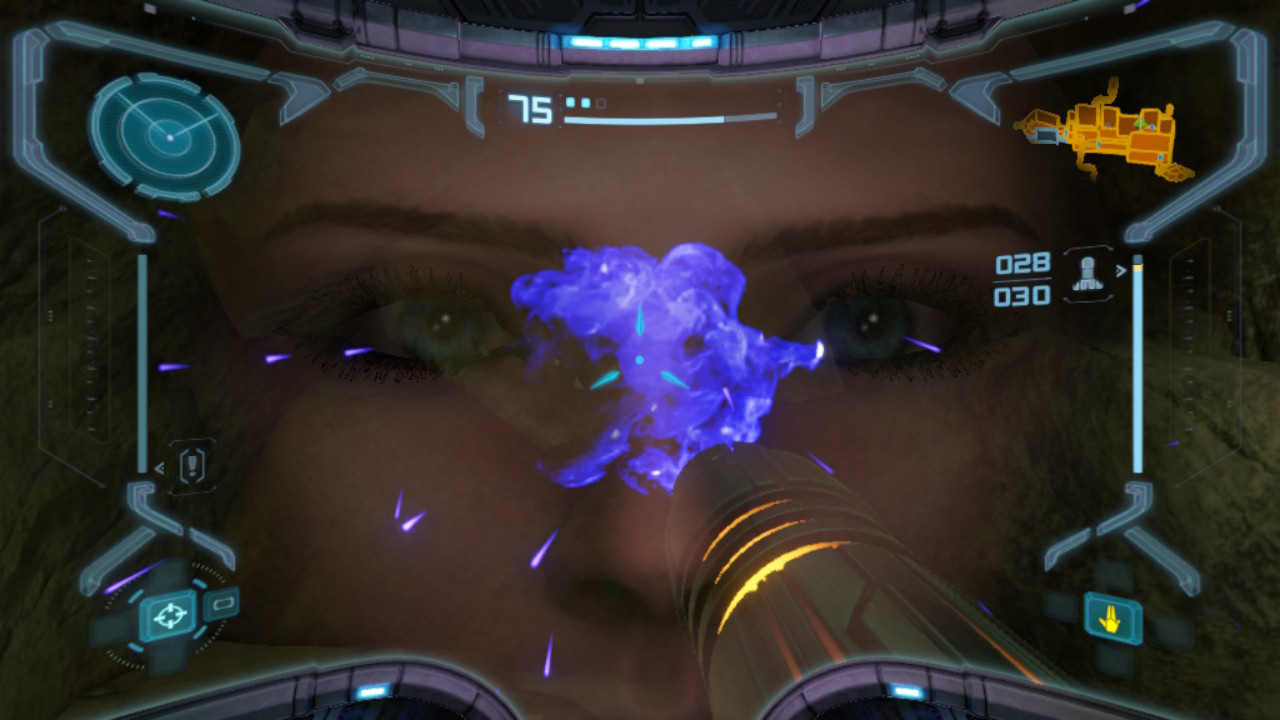
The visor also has upgrades to unlock. The scan function allows you to investigate targets in your field of vision. This is essential to find clues to defeat enemies, translate writings on walls or decrypt computer logs. They are key to interacting with machinery, disabling enemy barriers and many other uses. Future visor upgrades will let you see behind walls or trace heat signatures.
The remaster features dual stick controls akin to Halo and modern FPS titles, but there’s also layouts that mimmick the original Game Cube or Wii. I played with the modern control scheme during the whole game.
As enemies can attack from every angle and come in a variety of sizes, there is an automatic lock-in system built into the game. Unlike regular shooters, trying to aim yourself is not really worth it. Instead, exploring your surroundings is encouraged. As you backtrack through areas, simply avoiding enemies becomes easier than trying to kill them all everytime, like classic 2D Metroid.
There is no denying this: Samus is slow as a tank, jumps are floaty and somewhat difficult to get used to. In Metroid Dread you can pretty much fly through the whole game at max speed and you feel like the most agile being in the galaxy, sliding under obstacles and running at fast speeds. Not here. However, upgrades will at least help you optimize some routes.
As an old title, some mechanics can put off players used to modern quality of life features. There is no autosave, there are no retries for rooms or boss fights, there are no quick travel options. The world will connect to areas and have have multiple ways to access them, but the trips won’t get any shorter. Some areas in the game will be true challenges, with barely any save rooms in between constant enemy fire. This game really wants to test your skill to make sure you are ready for the final moments, if you can’t make progress through those, you probably missed a lot of health or missile upgrades you could go search for.
The map is interesting. A full 3D representation of the world, divided in regions and then more detailed maps for each. You can see your location and your direction, as well as all the doors you’ve accessed and their colors indicating what unlocks them. The map will also show hints from time to time, indicating you where to go next, but you may not be able to get there yet, and you won’t know the exact path to take. This is a great feature in my opinion. The one miss here is the lack of any indication when a room has been fully explored and all the items in it have been taken. A bit annoying when hunting for upgrades and not knowing where they are.
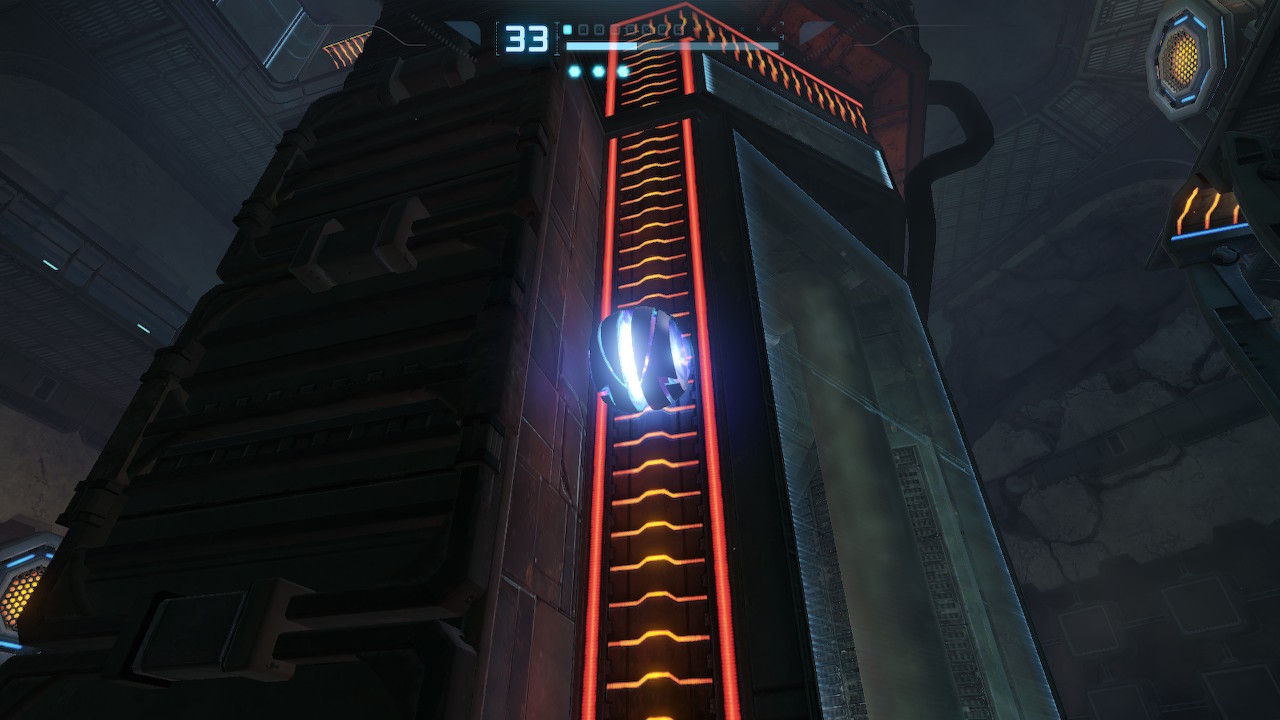
Boss fights in the game were a bit of a mixed bag, because of the lock-in shooting, most of them are built around waiting and waiting around and avoiding attacks until a weak spot is exposed. Some weak spots will be invisible unless you use a special visor mode, and some of them require you to use a specific beam attack or missile. This requires constant switching around of the beam and visor modes, and it was part of my main struggles with the controls scheme of the game.
In Breath of the Wild switching weapons or equipment freezes the screen and lets you take choose what to do at your leisure. In Metroid Prime, you have to switch beams and visors while on the move, and there will be an animation of a few seconds between each change. I never quite learned the button combinations until the very end, and even then it was still a bit of a mess. The worst of this happens when the door to the next room also requires a different beam to be opened. Most 2D titles in the franchise stacked beam effects on top of one another, or would let you toggle them in the pause menu.
Honestly, I don’t hate this decision. There even are occasions when multiple enemies will appear that will require different beams to be beaten. Each encounter requires you to pay attention and be efficient with your attacks—or run away to the next door and ignore everything trying to avoid as much damage as possible. The mechanic is fun, I just wish the controls were a bit better. I am not sure what I would have done myself.
Overall, the classic Metroid gameplay was adapted to perfection to the 3D world, there’s a reason this game was the best sold Metroid until Metroid Dread came along. I loved playing through it, even if traversal especially because of backtracking, was a bit annoying.
The art and music
Despite all this, the truth of the matter is that exploring Tallon IV is an absolute delight.
Metroid Prime came out in 2002, and it already featured incredible graphics for the time. Metroid Prime Remastered manages to do the same in modern times, offering an incredible level of visuals and performance that I never thought possible on the Nintendo Switch. This is easily the best looking game I’ve played on the system, it runs at 60 FPS without any struggles at all.
This smooth as butter movement and camera controls were a blessing I didn’t expect, and I’m thankful for them.
Another highlight has to be the HUD, the interface around Samus’s helmet looks amazing. I already talked about how it reacts to the environment, but the overall design deserves a lot of praise as well. The stylization of the visorts is excellently done.
Same goes for the music. The score of this game has been familiar to me since 2012, when I first saw some of those YouTube playlists with a title like “Relaxing Nintendo Music to Study and Work”. When Nintendo released their Nintendo Music app, their Tallon IV Exploration playlist quickly became a favorite of mine. I recognized it as soon as the game booted up, and I was incredibly surprised at how much it fully immersed me into this world. When I first visited the Phendrana Drifts, I stood there in awe as the music played.
The score contains reinterpretations of classic Metroid soundtracks. It is very fitting and iconic to this day. This soundtrack is simply beautiful, some of the best atmospheric music ever.
The Remastered version also let’s you access a ton of extras. 3D Models of the characters and enemies, conceptual artwork of the original Metroid Prime and the Remastered, and the soundtrack can be unlocked too!
The good
- The music is fantastic and very immersive, fading perfectly as you traverse the world.
- The visor, the effects around it, its interface and everything truly make you feel like Samus.
- The power-ups from the classic Metroid are expertly brought to the third dimension, and new powers that work great because of this.
- If you are lost, there are helpful hints that trigger after some time, letting you know where to go next, but not how.
- The lock-in shooting let’s you deal with enemies swiftly while strafing around them.
- The world design is great, it’s fun to realize how everything connects.
- The story shown through scans and logs is very interesting and adds a lot to Metroid’s lore.
- Performance is smooth as butter, and mastering the movement and controls is satisfying.
The bad
- The movement can be hard to get used to and feels slow at first.
- Switching weapons/visor modes can be confusing and annoying in the heat of combat.
- No quick travel options, backtracking can take a long time.
- Scanning every room and looking for clues can be annoying.
- No easy way to mark locations to remember any dead ends you may want to return to.
- Some boss fights amount to waiting around a long time until you can shoot at a weakspot.
- There are no indicators for rooms with missing items or upgrades.
- You can only save via save rooms, no auto-save. This could be a positive for people looking for challenge
Some tips and tricks
- Be ready to accept your defeat when you are far from a save spot. Also make sure to check for any enemy spawning areas to recover health easily.
- Make sure to spot every door and truly analyze your surroundings. There are areas you can reach very early which you may still miss.
- Screenshots! The Nintendo Switch let’s you easily take screenshots. Take one of your view and then the location in the map.
- Each room in the map has a name! If you don’t fancy screenshots, just save a note somewhere to return there.
- Be ready to shot at weird looking walls, and especially pillars! There are a few things that can be hidden there.
- Keep scanning everything you see! There’s a progress percentage of your scans and a lot of story to read.
- There is a difference in your jumps when you are targetting an enemy and when you are not, one is faster and to the sides, the normal one has more heights.
- Most attacks are actually very easy to avoid, just stay at a safe distance and figure out patterns first.
- Seriously, scan every boss you face. It will give you an idea of how to defeat it. Also scan any suspicious things in the arena itself, it might give you hints too.
Final thoughts
I loved this game so much! However there is a grave mistake I made that cost me hours of playtime. Make sure to always remember to look for every door. I already mentioned in the tips and tricks. But there was this area that exposed me to a lot of the early story, that I completely missed for like ten hours.
Most playthroughs of this game are about 12 hours long. Mine was 18 hours, and my playtime on Switch was about 25 hours.
To be clear. I loved pretty much everything about it. But having to drag myself across already visited areas because I missed some pretty obvious clues with items I needed to collect could have been a bit of a chore. Again, I was happy to do it, because I loved the movement by the end and the control I had of Samus and knowing my way around the world, but you may end up very annoyed by it all, or not as thrilled about the slowness of it all.
This game features the best graphics on the Nintendo Switch, the best performance, one of the most fantastic atmospheric music of all time. One of the best transitions to the third dimension in a franchise ever. The familiar sense of progression in the series that started its own genre. I am baffled I didn’t play this sooner, but I am extremely glad I did.
Yes some boss fights are meh and missing out on some scans is annoying. Backtracking will never be for everyone and the lack of a run button may cause some people to riot. Nonetheless, this is amazing stuff.
The original title has a score of 97 in Metacritic, while the remaster has a 94. No matter how you look at it, this is one of the greats! I highly, highly recommend giving it a go. It was a fantastic journey that gripped me the whole way through.
I’ve been able to play and focus on individual games lately, and I’m not sure if that is a change in my own mindset, or if the games are just that good. In any case, this was a blast. A contender for my favorites of the year.
This is day 82 of #100DaysToOffload
Backlinks
- I expect nothing of my games and books on October 14, 2026
- Summer Game Challenge 2026 results! on September 15, 2026
- Gaming Updates (Summer 2026) on July 23, 2026
- RE: On Form Factor on July 07, 2026
- June 2026 Summary on July 02, 2026
Comments
If you have something to say, leave a comment, or contact me ✉️ instead
Reply via Fediverse
You can reply on any Fediverse (Mastodon, Pleroma, etc.) client by pasting this URL into the search field of your client:
https://fosstodon.org/@joel/116778123105412854

Are you looking for more? Here's some more great content for those who dare scroll down this section of the page. Suit yourself!


