
Transistor
A review for Supergiant's second game ever! An isometric mix of action and turn based RPG, with a sci-fi setting and a super intriguing story that I loved to bits!
Before Hades, Supergiant Games already had a place in the indie gaming scene, even though their previous games didn’t get as much of a spotlight, they were known for delivering quality from the start.
One of their first titles was Transistor, a sci-fi themed action/tactics RPG hybird released in 2014—about four World Cups ago in case you are wondering. In it, we control Red, a famous singer in the city of Cloudbank. The story kind of begins with a murder mystery, as we find Red besides a corpse, stabbed with a giant sword, which we soon realize, has somehow absorbed the man’s consciousness. Red has also lost her voice for some reason, so the sword itself— called the Transistor—becomes Red’s companion and narrator throughout the game, as well as our weapon to weild throughout the adventure
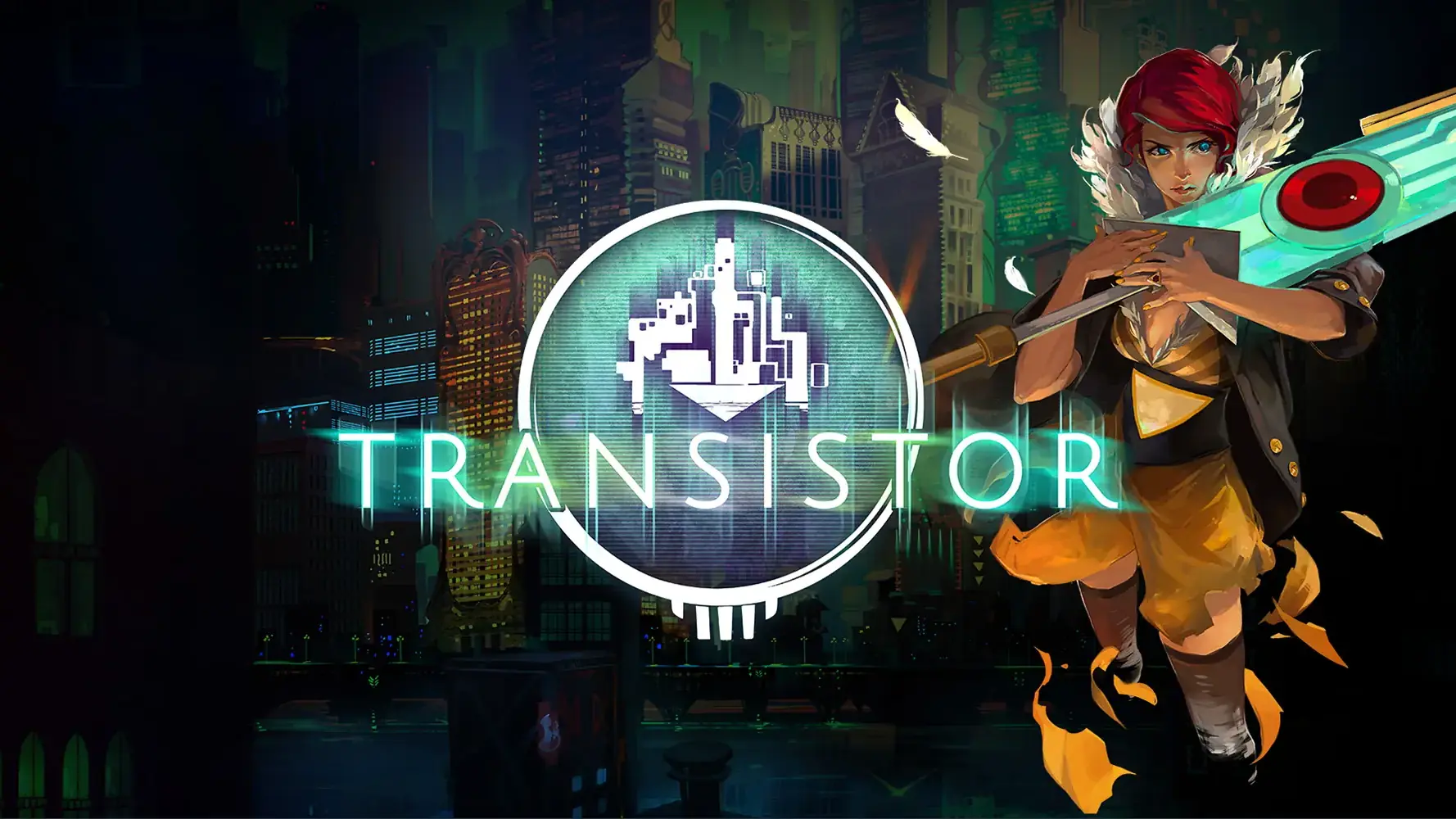
Red has to weild the Transistor to defend herself against hordes of robot enemies, who we come to know as the Process. Slowly but surely, they are corrupting the city of Cloudbank, which up to this point had been a cyberpunk utopia, that could be modified and acommodated to the citizens’ taste.
As Red advances, she will encounter the remains of multiple important people of Cloudbank who were “integrated”—killed—and the Transistor will be able to absorb “functions” from them, which Red can use during combat as new attacks or enhancements. Each one of those functions also show information of the character they were absorbed from, their profile and motives, including story elements. As you use the functions in different ways, you can unlock new aspects of their backstory.
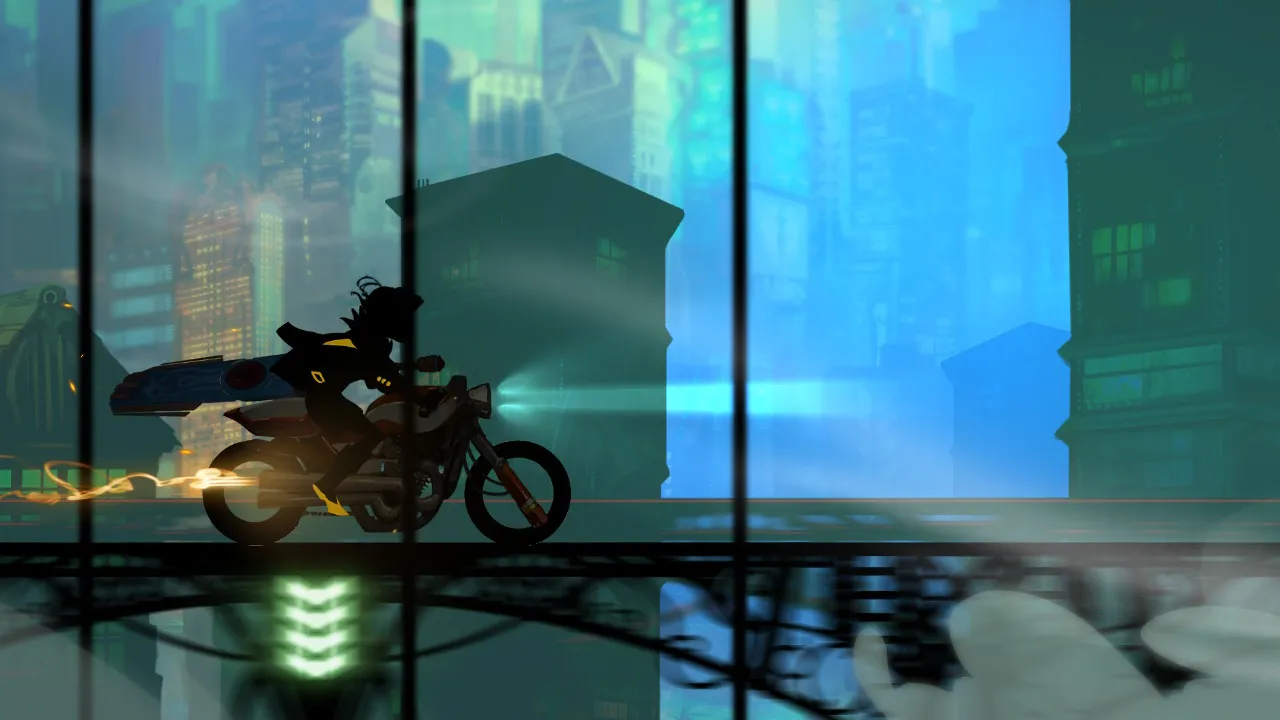
The combat is one of the game’s most defining aspects, extremely unique when compared to anything else in the entire genre. It is a polar opposite to Hades’ button-mashing style that needs quick reactions and attacks. Pretty much every movement is fairly slow—Monster Hunter’s Great Sword combat slow on normal combat—However, you have access to a special Turn() function which is the meat and potatoes of it all.
You see, when you trigger a Turn, the environment goes dark, and time completely stops. You can move in any direction, perform attacks, see how the resulting damage builds up, undo previous moves and then commit to perform them. Each move has a certain cost, so you can only “queue” a few actions before you have to commit. Once you finish a turn, you’ll return to normal and do all the attacks in one fell swoop, with the enemies simply taking all the hits you got on them.
You are pretty much programming a sequence, hence why the moves are called functions, and even named as such, like Turn(), Switch() or Spark(). This mechanic feels like a mix of turn based and tactics combat, as you have to think about plenty of parameters, like positioning, attack range and even enemy alignment.
One big caveat here is that not everything you do in your sequence may go as you expect. For example, if you chain multiple attacks without moving, the first couple may land well, but the last may miss, if the enemy was knocked back too far from the attack’s area of effect and you didn’t account for it. You will need to learn how some attacks affect the enemy, and take it into consideration during a Turn.
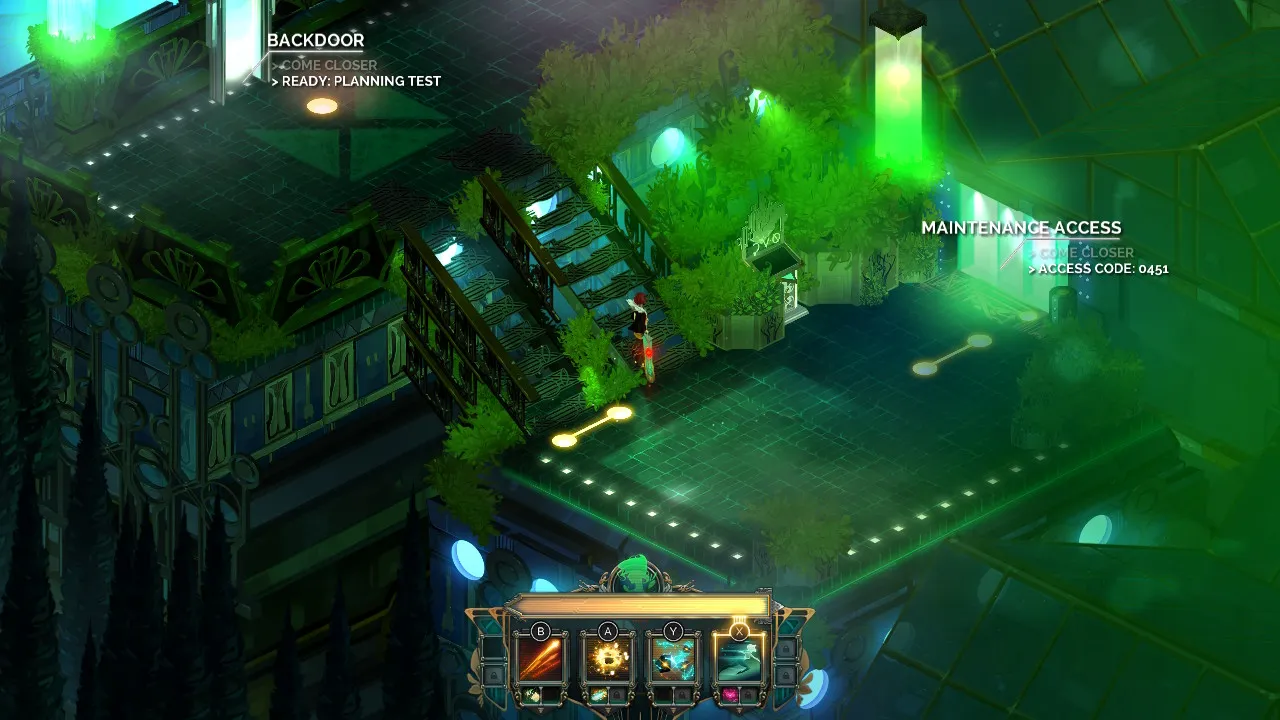
When it comes to story, the delivery of this one is rather obtuse. You follow a linear path from beginning to end, finding new characters and functions to use. You slowly see the Process integrating all of Cloudbank, alterating the environment and making it much more sterile, you also come to understand what caused the Process to get out of control, and how each person you find was murdered/integrated in the first place though the why is often obtuse.
There’s also terminals you can access all throughout the journey, which let you read news and reports of what’s happening in the background, this is also one of the few places where Red communicates, as she can type her thoughts there. The terminal access let’s you chat with certain characters too, though this is not something the player controls, just a way to progress the story and give us more information.
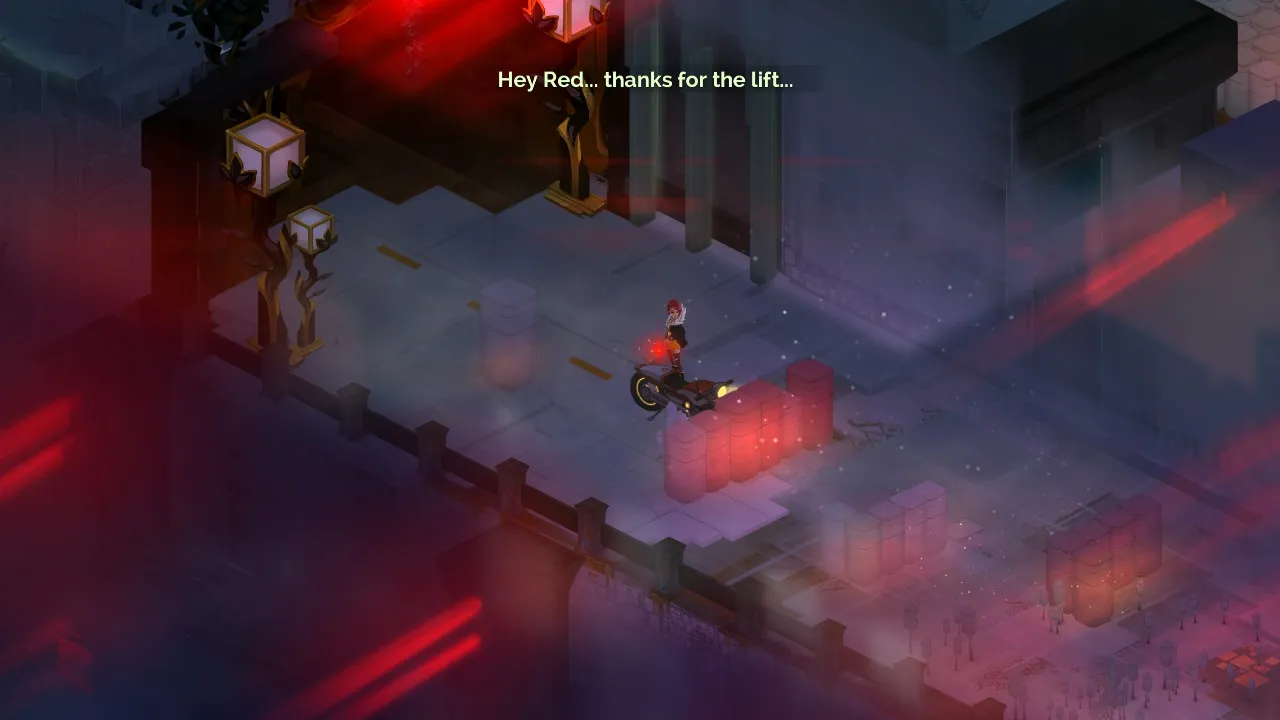
There’s a backdoor area of the game, separated from Cloudbank somehow, where you can relax for a while and also enter special doors. They are pretty much separate challenges that will require you to understand the mechanics and functions at your disposal.
Each challenge focuses on a different aspect, from speed to efficiency of moves, it’s honestly a very fun set of rooms to try and beat multiple times, since you can use them to practice and optimize your playstyle. Besides, it’s a way to unlock songs from the game which you can play at will during your stay there.
Oh right, the songs, the music, the score… Darren Korb is an absolute genius, something I discovered thanks to Hades and can fully confirm here as well. The soundtrack of this game is magnificent. It simply sparks joy, what else can I say?
The voice work too. Even though Red lost her voice, we get to see a few cutscenes of her singing, and of course, the Transistor, our narrator and companion, does a fantastic work throughout the whole journey. Later in the game some other characters with voice lines will appear, and I must admit, it’s really good stuff. All of them fit and you can feel the weight of each word similarly to Hades, they are excellently done.
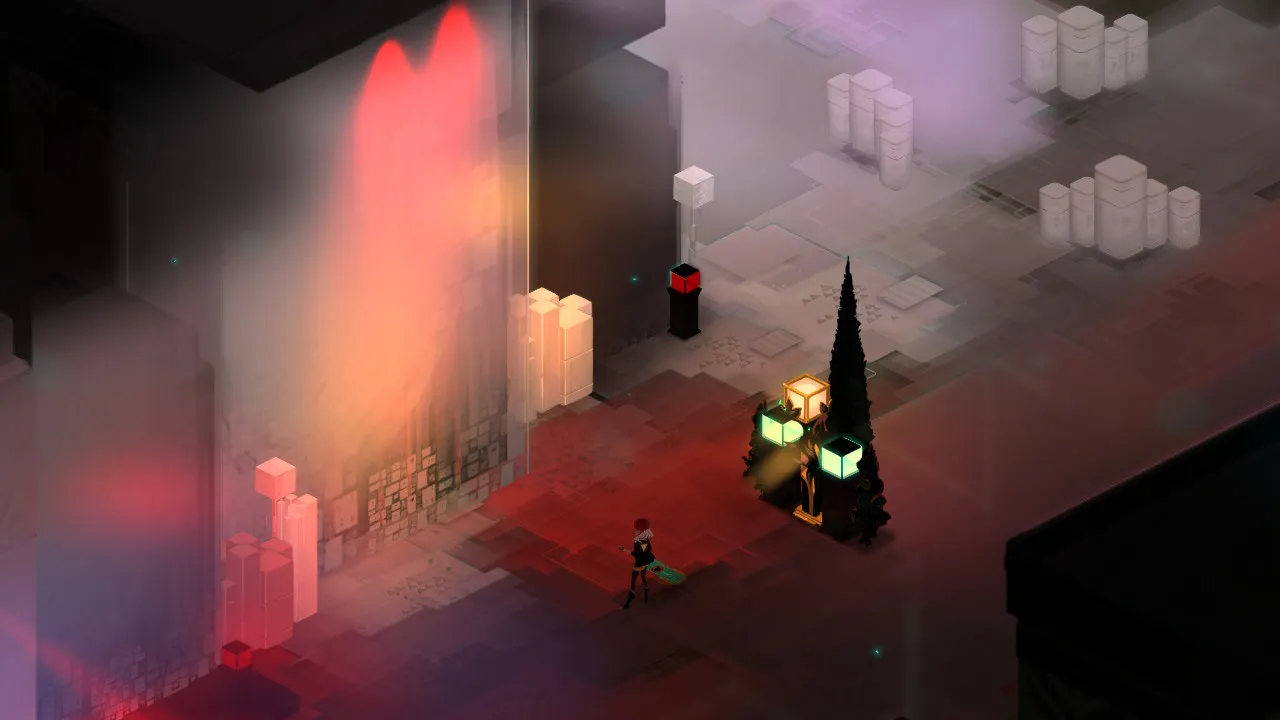
The art feels very minimalistic and futuristic, it’s the same isometric view we can find in Hades (and most games from Supergiant), and here the artstyle is much more abstract. It kind of looks like everything is a painting, full of straight lines and angles, somewhat cell-shaded too.
The good
- An intriguing story and premise.
- A linear adventure where you can rarely get lost.
- Deep combat system that is easy to understand and fun to master.
- Excellent voice work and soundtrack.
- Well written script and characters.
- Fantastic artstyle and atmosphere.
- Does not overstay its welcome.
- It was a New Game+ mode.
The bad
- The story may feel a bit too slow to progress, like it’s dreep-feeding information.
- Sometimes an attack sequence may break or behave unexpectedly.
- A few of the enemies can be quite bothersome, but nothing too bad.
- A lot of screens with a lot of lore you may miss.
- Some of the events or dialogue may go above your head
Overall
This game was really enjoyable! I played it on my Nintendo Switch and finished it less than six hours, in the span of ten days, mostly during my commutes to and from work! I wore wired earphones for most of the story, though I also enjoyed it at home on the TV.
The performance was perfect and I really liked how the story unfolded, even if sometimes it felt like some dialogue contained a lot of words without really saying much.
The sci-fi setting was one of the most intriguing for me, I never really understood how it all worked, though I don’t think we are meant to. A part of me wondered if we even play as humans, or if we are just some super futuristic version of it all, given the powers we have and the enemy we face.
Anyway, I’m just theorizing at this point, it’s not really spoilery, I think, but yeah. It’s a game that gives you quite a bit to think about when it comes to reality and how we write our future as people. Definitely worth a play given its lenght, in my opinion.
This is day 7 of #100DaysToOffload and post 2 of Blaugust 2026
Backlinks
- Summer Game Challenge 2026 results! on September 15, 2026
Comments
If you have something to say, leave a comment, or contact me ✉️ instead
Reply via Fediverse
You can reply on any Fediverse (Mastodon, Pleroma, etc.) client by pasting this URL into the search field of your client:
https://fosstodon.org/@joel/117028371014355490

Are you looking for more? Here's some more great content for those who dare scroll down this section of the page. Suit yourself!


